Shop by Category

Chào mừng đến với Martfury - Cửa Hàng Mua Sắm Online!
 Tiếng Việt
Th02 02, 2026 / By Grab n Go Admin / in Thương mại điện tử
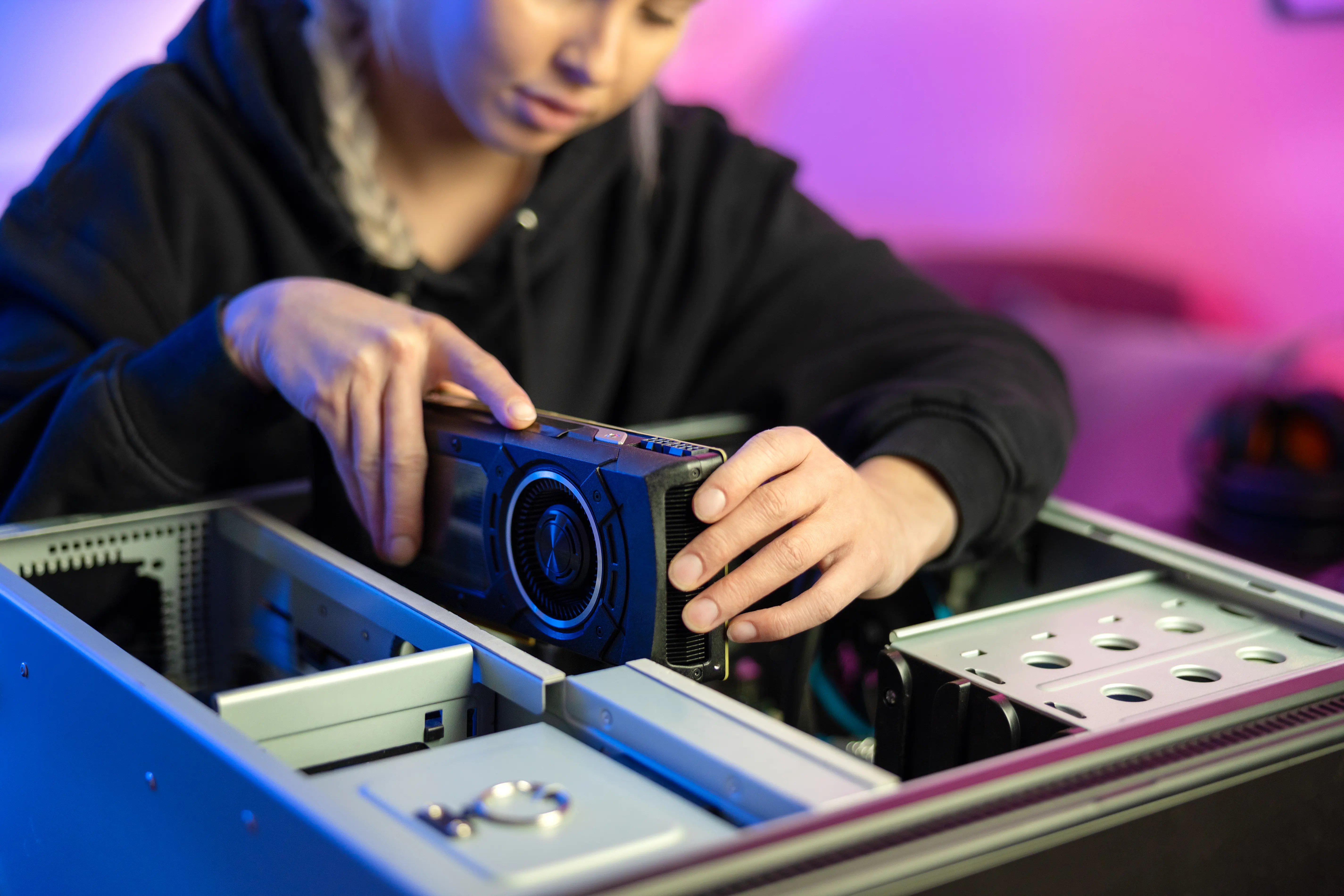
A great gaming experience rarely announces what makes it great. It feels smooth before it looks impressive. Movements stay fluid even when scenes become chaotic. Lighting behaves naturally, textures hold their depth, and nothing pulls you out of the moment. All of that depends heavily on one component making thousands of decisions per second: the graphics card.
We look at GPUs as long term investments rather than short lived upgrades. Choosing the right graphics card is not about chasing the highest numbers on a spec sheet. It is about matching performance, cooling, power efficiency, and reliability to the way you actually play. NVIDIA powered MSI graphics cards continue to stand out in this space for one reason above all else: consistency.
Every frame on screen is the result of calculations happening faster than the eye can register. The GPU processes geometry, lighting, textures, shadows, and motion simultaneously, often while responding to real time player input. As games become more detailed, this workload grows heavier.
Modern game engines lean on the GPU for far more than visuals alone. Physics simulations, environmental effects, and post processing techniques are all handled here. When the graphics card struggles, the experience breaks first through stutter, then through dropped frames, and finally through instability.
A system only performs as smoothly as the platform that distributes data across every connected component. MSI NVIDIA GPUs are designed to handle sustained workloads rather than brief performance spikes. This matters more than raw peak performance because real gaming sessions are measured in hours, not seconds.
NVIDIA develops the architecture, drivers, and software ecosystem that modern games rely on. MSI focuses on thermal engineering, physical durability, and board level optimization. Together, they create GPUs that behave predictably across a wide range of systems.
Driver stability plays a major role in long term satisfaction. NVIDIA’s frequent updates ensure compatibility with new game releases, while MSI’s cooling designs help maintain consistent clock speeds under load. The result is a card that performs the same way today as it will months down the line.
When components communicate cleanly without interference, the entire system feels more responsive and controlled. This reliability is especially important for gamers who do not want to constantly tweak settings just to maintain stability.
Before looking at models or memory sizes, resolution should be your starting point. The workload placed on a GPU increases dramatically as resolution rises.
Balanced systems rarely happen by accident, they are the result of planning from the base upward. MSI NVIDIA GPUs scale well across these resolutions, allowing users to select performance without unnecessary excess.
Clock speeds, CUDA cores, and memory bandwidth are useful indicators, but they do not guarantee a good gaming experience on their own. Thermal behavior and power efficiency often matter more in real usage.
A GPU that overheats will throttle. A card that draws unstable power may crash under load. MSI addresses these issues through robust cooling solutions and reinforced board designs that help maintain consistent performance over time.
When airflow, power delivery, and component layout align properly, performance becomes effortless rather than forced. Instead of focusing solely on the highest tier available, it is often smarter to choose a GPU that operates comfortably within your system’s limits.
Cooling design directly affects how a GPU behaves during long sessions. MSI’s dual and triple fan designs prioritize airflow efficiency while keeping noise levels reasonable. This balance matters when gaming for extended periods or working in shared environments.
Sustained cooling also protects internal components from long term thermal stress. Lower operating temperatures translate into longer hardware lifespan and fewer performance dips. Heat management is not just about cooling a component, it is about preserving stability across the entire build. A quieter, cooler GPU often delivers a better overall experience than a louder card chasing marginal gains.
Some GPU features genuinely improve everyday gaming. NVIDIA’s support for ray tracing allows for more realistic lighting and reflections, while DLSS helps offset the performance cost by intelligently scaling images without obvious quality loss.
Beyond visuals, NVIDIA’s ecosystem includes strong support for modern APIs, creative software, and streaming tools. This makes NVIDIA GPUs appealing not just for gaming, but for users who create content alongside play.
A complete PC is not assembled randomly, it follows a logical sequence where each decision supports the next. MSI integrates these technologies seamlessly, allowing users to benefit without excessive configuration.
Future proofing is often misunderstood. It does not mean buying the most expensive graphics card available. It means choosing a GPU that will remain capable across several game generations without forcing early upgrades.
Consider how your gaming habits may evolve. Higher resolution monitors, more demanding titles, or creative workloads can all change what you need from a GPU. The most satisfying builds are those where every component still feels relevant years after the first power on.
Selecting a well matched MSI NVIDIA GPU ensures that performance remains stable, efficient, and enjoyable long after installation.
A graphics card does not exist in isolation. It works within a system that must support it electrically, thermally, and structurally. When those conditions are met, gaming stops feeling technical and starts feeling natural.
We focus on offering graphics solutions that align with real world gaming needs rather than marketing driven extremes. MSI NVIDIA GPUs reflect that philosophy through dependable performance, thoughtful engineering, and broad compatibility.
Choosing the right GPU is not about owning the most powerful hardware. It is about building a system that feels cohesive, responsive, and ready for whatever you play next.
Th09 21, 2026 by Grab n Go Admin
Th09 18, 2026 by Grab n Go Admin